
How Children in Wake County Suffer When There Is No Food at School
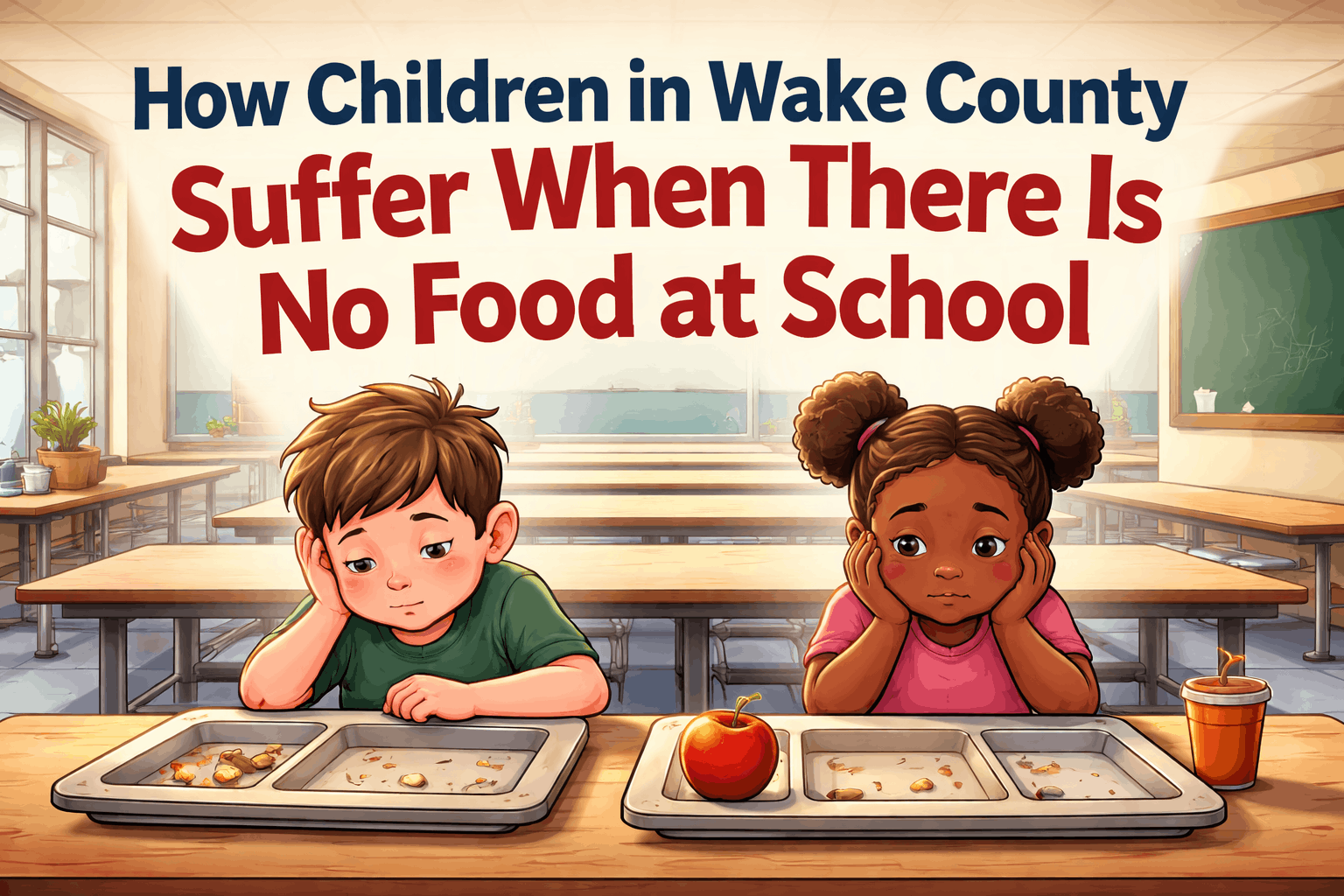
Introduction: The Importance ofChildren in Wake County Suffer When There Is No Food at School.
Most people do not picture hunger when they think about a classroom.
They picture notebooks, morning lessons, group projects, and children raising their hands. They picture a normal school day. What they do not always see is the child who walked through those school doors without breakfast. They do not see the student trying to focus while their stomach aches. They do not see the quiet stress of a child who knows lunchtime is coming but is not sure whether there will be food waiting.
That is the hidden side of child hunger in Wake County.
For many children, the school day does not begin with curiosity or energy. It begins with discomfort, distraction, and worry. For Children Partners says that 11.8% of children in Wake County face food insecurity, which equals about 31,640 children. That means thousands of local children are trying to learn while carrying a burden no child should have to carry in the first place.
When there is no food at school, the damage goes far beyond an empty stomach. Hunger touches concentration, confidence, classroom behavior, attendance, and emotional health. It changes how a child experiences the day. It changes how they see themselves. And over time, it can change how they move through school altogether.
This is why the issue matters so deeply. A child cannot do their best in class when their most basic need has not been met. They cannot focus on reading, math, or problem-solving when their body is asking for food. They cannot feel fully safe or settled in a school environment when hunger is sitting with them through every lesson. Wake County Looks Thriving But Not Every Child Is
According to childhood food insecurity data for North Carolina, 11.8% of children in Wake County approximately 31,640 children experience food insecurity. These are not numbers from a distant struggling county. This is Wake County. This is Raleigh. This is our community.
Food insecurity does not always look like what we imagine. It looks like a parent working two jobs who forgot to pack a lunch. It looks like a school meal account that ran out mid-month with no way to refill it. It looks like a household where the groceries run thin by the last week of the month. For many of these children, school meals breakfast and lunch are the most reliable food they receive all day.
When that meal is missing, or when a balance is due that a family simply cannot pay, a child goes hungry. And a hungry child cannot learn.
What Happens When Children Go to School Hungry
A hungry child often struggles in ways adults can miss.
Sometimes hunger looks like tired eyes and low energy. However, it can also look like poor concentration, frustration, irritability, or silence. A student may stop participating. Another may become restless. A child who is usually eager to learn may suddenly seem withdrawn. From the outside, it can look like a behavior problem or a lack of effort. In reality, hunger may be the reason they cannot engage the way they normally would.
This is what makes school hunger so painful. It affects a child’s performance, yet the child is not the cause of the problem.
For Children Partners explains that many children are denied breakfast or lunch because of things completely outside their control, including forgotten lunches, empty meal accounts, and financial hardship at home. Those details matter because they show how easily a child can end up in this situation. A student does not need to come from one type of family or one kind of neighborhood. Hunger can enter the school day quietly, and once it does, it affects everything that follows.
A child who has not eaten often starts the day already behind. The brain has less fuel. Focus gets weaker. Patience gets shorter. Even simple tasks can feel harder than they should. Instructions are easier to miss. Reading may take longer. Solving problems may feel frustrating. Small academic struggles begin to pile up, and the child may start to feel lost even if they are trying.
That is one of the most heartbreaking parts of this issue. Hunger can make a capable child look like a struggling one.
How Hunger Affects Focus, Learning, and School Performance
Food insecurity in Wake County is not just a household issue. It is also a classroom issue.
School is where children are expected to listen, think, remember, work with others, and stay emotionally regulated for hours at a time. All of that becomes more difficult when they are hungry. A child who needs food is not operating from a full sense of stability. They are working through discomfort first. Learning comes second, even though school asks it to come first.
For Children Partners centers its mission around this exact point. Its message is that children should be able to focus on learning, not hunger. That line is powerful because it captures what food does inside the school day. It does not only nourish the body. It clears space for learning.
When children go without meals at school, the effects can show up in several ways:
A hungry child may struggle to stay alert during morning lessons. They may drift off mentally even when they want to pay attention. They may lose confidence because assignments feel harder than usual. In addition, repeated hunger can affect mood, which then shapes behavior and classroom relationships. A child who feels physically unsettled may become easily upset, more reactive, or less willing to engage with others.
Over time, that can become a serious barrier to learning.
The issue is not only academic. It is emotional too. A child who feels different from their classmates may begin to pull back socially. They may feel embarrassed during breakfast or lunch periods. They may worry other students will notice. Even when adults are trying to help, the child can still carry a quiet sense of shame.
That emotional pressure can stay with them long after the school meal period ends.
The Hidden Emotional Cost of No Food at School
One of the biggest mistakes adults make is assuming hunger is only physical.
It is physical, of course. Yet it is also emotional and deeply personal. Children notice when they cannot access what other children can. They notice when they are told no. They notice when their situation feels exposed. Even if no one says anything directly, a child can still feel singled out.
That kind of feeling leaves a mark.
A student who is hungry may begin to dread parts of the school day. Lunch becomes stressful instead of comforting. The child may start to associate school with anxiety rather than safety. That matters because children need school to feel like a place where they can grow, not a place where they are reminded of what they do not have.
For Children Partners was founded after its founder learned that a teacher was using personal money to buy food for students who could not afford school meals. That story explains the emotional reality of the crisis better than statistics alone. It shows how immediate the need is. It also shows how often children depend on the compassion of adults simply to get through the day with dignity.
No child should have to depend on chance kindness for something as basic as breakfast or lunch.
Why This Problem Deserves More Attention in Wake County
Many people assume child hunger happens somewhere else.
They picture distant communities, not local schools. They imagine severe need in places far away, not in neighborhoods they pass through every day. That assumption is part of why the problem can stay hidden. Wake County is often associated with growth, opportunity, strong schools, and thriving communities. However, those strengths do not cancel out hunger. They can exist beside it.
That is why local awareness matters.
For Children Partners says thousands of children in Wake County are affected by food insecurity, and its work is focused specifically on making sure children have access to breakfast and lunch during the school day. This local focus is important because it turns a broad issue into a clear responsibility. It tells the community that this is not someone else’s problem to solve. It is ours.
The reality is difficult but simple: children in Wake County are going to school hungry. Some are carrying empty meal balances. Some are facing hardship at home. Some are caught in circumstances beyond their control. Whatever the reason, the result is the same. A child sits in class without the nourishment they need.
Once people understand that, the next question becomes harder to ignore: if the need is this clear, what are we doing about it?
Why School Meals Matter More Than People Realize
School meals do not solve every challenge in a child’s life. Yet they can change the direction of a school day.
Breakfast can help a child start the morning with energy and focus. Lunch can stabilize the rest of the day and make it easier to learn, participate, and stay emotionally balanced. These are not small outcomes. They are basic conditions that help children function at school the way they should be able to.
For Children Partners says its model is built for direct impact inside school walls during school hours, where the effect is immediate and directly tied to a child’s ability to learn that same day. That is what makes school meals so important. They meet the need at the exact point where hunger begins interfering with education.
The organization also explains that $5.25 covers breakfast and lunch for one child for one school day. That number matters because it turns concern into something practical. Many people want to help hungry children in Wake County, but they do not know what their donation can really do. This gives them a clear answer. A relatively small amount can create a meaningful difference in a child’s actual day at school.
That is the power of a direct school meal program. It does not ask donors to guess where their support goes. It shows the outcome clearly.
A Local Nonprofit with a Direct Mission
For Children Partners describes itself as a registered 501(c)(3) nonprofit school meal charity in Wake County that was founded in 2022. Its mission is straightforward: no child should be denied a meal at school. The organization says 100% of every tax-deductible donation goes directly toward providing school meals, with no overhead deducted from donor funds. For people looking for a local, direct, and transparent way to help, that clarity is significant.
The impact numbers on the site make the mission feel even more real. For Children Partners says it currently supports 133 Wake County schools, has transferred $26,491 directly to students, and has provided 273 breakfasts and 1,060 lunches. These are not abstract promises. They are concrete examples of what happens when a community chooses to act.
The organization also offers more than one path for support. People can make a direct donation, become monthly donors, or host a fundraiser. The fundraising page explains that every fundraiser helps provide breakfast and lunch to children who would otherwise go hungry at school. The FAQ page adds that individuals, churches, companies, and groups can start fundraisers to support local schools. If you want to make a real difference, consider donating school meals in Wake County.
That flexibility matters because not everyone helps in the same way. Some people give once. Others give monthly. Some rally a school, workplace, or community group. All of those actions can lead to the same result: a child gets food at school instead of going without it.
What Your Donation Really Means
It is easy to look at a donation button and think of money in abstract terms.
However, when the cause is school hunger, a donation means something much more personal. It means a child can sit down in class with a better chance to focus. It means a student is less likely to spend the morning distracted by hunger. It means one more child does not have to feel embarrassed, left out, or overlooked during the school day.
In other words, a donation is not just support for a nonprofit. It is direct support for a child’s dignity, concentration, and daily well-being.
That is why donation-focused blog content matters here. People do not only need information. They also need a reason to care deeply enough to respond. The reason is already in front of us. Children in Wake County are trying to learn while hungry. Some are doing their best under conditions no adult would consider acceptable. If a community can help fix that, then it should. And it can.
How You Can Help Hungry Children in Wake County
If this issue moves you, do not let it end with sympathy.
Turn that feeling into action.
A direct donation can help provide school meals to children who need them now. A monthly gift can create steadier support over time. A fundraiser can involve more people and help a specific school community. Even sharing the issue can open more eyes, because many people still do not realize how serious child hunger in Wake County really is.
The hardest truth in this issue is also the clearest one: children cannot solve this problem by themselves. They cannot refill an account. They cannot control financial hardship at home. They cannot advocate for themselves in the same way adults can. They show up to school and hope someone made sure there would be food waiting.
That someone can be us.
No child should have to choose between hiding their hunger and sitting with it all day. No student should have to feel ashamed because food is out of reach. No teacher should have to carry that burden alone. Wake County has the ability to respond with compassion, clarity, and action. What matters now is whether enough people decide that this is worth solving.
It is.
Because when a child is fed, the day changes.
When the day changes, school feels possible again.
And when enough children are fed, a community becomes stronger than the problem facing it.
Frequently Asked Questions
Q: What happens when children in Wake County go to school hungry?
When children go to school hungry, they often struggle with focus, energy, emotional balance, and classroom participation. Hunger can make learning harder and can also affect confidence and behavior during the school day. For Children Partners focuses on helping children access breakfast and lunch so they can learn without that barrier.
Q: How serious is child hunger in Wake County?
For Children Partners says 11.8% of children in Wake County, or about 31,640 children, face food insecurity. That means child hunger in Wake County is not a small or isolated issue. It is affecting thousands of children in local schools.
Q: Why do school meals matter for children in Wake County?
School meals matter because they help children focus, learn, and get through the school day with more stability. For Children Partners says its work is designed to meet hunger inside school walls during school hours, where the impact is immediate and tied directly to learning.
Q: How can I help hungry children in Wake County?
You can help by making a direct donation, becoming a monthly donor, or hosting a fundraiser. For Children Partners also allows schools, families, groups, and businesses to support local fundraising efforts that help cover meals for children at school.
Q: How much does it cost to provide school meals for one child?
For Children Partners says it costs about $5.25 per child per day to provide both breakfast and lunch. That makes even a small donation meaningful for a child who might otherwise go without food during the school day.
Q: Why donate to a school meal charity in Wake County?
A local school meal charity can direct help where the need is immediate: inside local schools, during the school day, when hunger can interfere with learning. For Children Partners says 100% of tax-deductible donations go directly toward school meals, which gives donors a clear and direct way to support food-insecure children in Wake County.
